


The short answer: your holster program sets your optics timeline
If your agency is putting red dots on duty pistols, the thing that decides your timeline is not the optic order. It is the holster program. A slide-mounted optic changes the shape of the pistol, and a duty holster is molded to that exact shape. Until every affected officer has a holster molded for the new configuration, the transition is not finished — it is sitting in a drawer waiting on gear.
Work through this checklist before the first purchase order goes out:
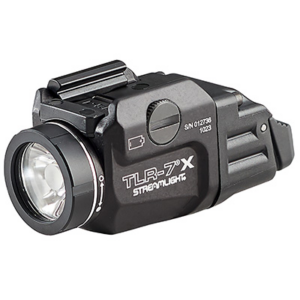
- Inventory the fleet as combinations, not pistols. The unit of planning is pistol + weapon light + optic, per officer. Two officers with the same pistol and different lights are two different holster fits.
- Map every combination to a specific optic-cut fit. Match each line of the inventory to a listed holster fit. No inferred fits, no “close enough.”
- Standardize the retention configuration. Decide once whether the department runs ALS-only or ALS plus the SLS hood, and hold that line across the fleet so the draw stays uniform.
- Budget holsters in the same line item as the optics. A holster program funded “later” is how transitions stall for a fiscal year.
The rest of this guide works through each step.
Why optics transitions stall at the holster
Fitment is pistol + light + optic — not just the pistol
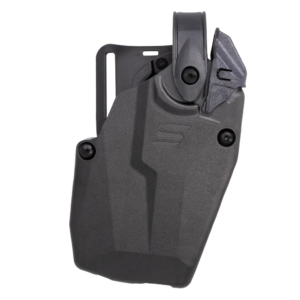
A duty holster fit is specific to the whole package on the belt. Safariland lists its RDS duty fits by pistol model, weapon light, and optic cut, and the same base holster is a different SKU for each combination — the 6390RDS for a Glock 17 MOS with light and the 6390RDS for a Glock 19 MOS with light are separate fits, not one holster that handles both.
The most common planning error lives exactly here: a department counts pistols, orders that many holsters in one fit, and discovers the traffic unit runs a different light. The fundamentals of holster selection have not changed since our holster buying guide — what has changed is that the optic added a third variable to every fit decision.
What physically changes on an optic-cut holster
An RDS-cut duty holster reshapes the top of the holster body and the hood so they clear the mounted optic while the pistol stays fully seated and enclosed. On a non-cut holster there is simply no room where the optic now sits. That is why this is a replacement program, not an adjustment — there is no modification that turns a standard enclosed duty holster into an optic-ready one.
Retention carries over — fitment doesn’t
The good news for training staff: Safariland’s RDS duty models use the same retention hardware as the standard versions. ALS (Automatic Locking System) locks the pistol on holstering and releases from a thumb lever as the hand takes the grip. SLS (Self Locking System) adds the rotating hood that gets pushed down and forward before the draw. An officer moving from a 6360 to a 6360-family RDS variant keeps the same draw sequence they already trained.
One terminology note for the spec sheet: the “Level I” and “Level III” retention language in these model names is Safariland’s own rating system — it counts the layers of retention hardware on the holster. It is a useful shorthand for standardizing a fleet, and it is a manufacturer’s rating, not a government certification.
For planning purposes this means retraining effort concentrates where it belongs — on the sight picture — while the holster manual of arms stays put.
Audit before you order: mapping your fleet
Reading the model numbers
The RDS duty catalog decodes cleanly once you know what each part of the model number carries:
| Model family | Construction | Ride height | Retention hardware |
|---|---|---|---|
| 6360RDS / 6365RDS | 6000-series laminate | mid / low | ALS + SLS hood |
| 6390RDS / 6395RDS | 6000-series laminate | mid / low | ALS |
| 7360RDS / 7390RDS | 7TS polymer | mid | ALS + SLS / ALS |
Series is a construction choice: the 6000-series is Safariland’s traditional laminate duty build, the 7TS line is their polymer construction. Ride height is a uniform-and-vehicle ergonomics choice. Retention hardware is the standardization decision from the checklist.
Mixed fleets and the per-combo trap
Build the audit as a simple sheet: officer, pistol model, weapon light, optic footprint, current holster model, target RDS fit. Most fleets collapse to a handful of combinations — patrol on one pistol-light pairing, investigations on a compact, a few legacy exceptions.
The trap is the last five percent: the sergeant with the older light, the spare pistols in the armory, the officer with suppressor-height sights. Those lines get resolved by checking the listed fit or by asking — never by assuming a neighboring fit will clear. If a combination is not listed on a product page, that is a question worth asking before the order goes in, not after.
The RDS duty short list
We keep more than a hundred RDS duty configurations on the wall across the 6000-series and 7TS lines. A representative spread of what fleets standardize on:
- Model 6365RDS ALS/SLS Low-Ride — Glock 17 MOS with light — the full-hardware configuration: ALS plus SLS hood, low ride.
- Model 6390RDS ALS Mid-Ride — Glock 17 MOS with light — ALS-only, the lighter standardization choice.
- Model 6390RDS — Glock 19 MOS with light — same configuration for the compact fleet.
- Model 6390RDS — Sig Sauer P320 RX 9 with light — P320 departments, same decision tree.
- Model 6390RDS — S&W M&P 2.0 9 with light — M&P fleets likewise.
- Model 7360RDS 7TS ALS/SLS Mid-Ride — Glock 19 MOS with light — the polymer-construction route with full hardware.
- Model 6354RDSO ALS with QLS19 fork — Glock 19 MOS with light — the QLS locking fork lets one holster move between mounting platforms, which suits units that switch between belt and tactical rigs.
Current pricing and availability are on each product page, and the full assortment is on the duty holster wall.
Policy and training line items for the rollout
Agencies that have published their transitions keep converging on the same administrative checklist: a defined list of approved optic models, policy language that treats the optic as part of the pistol rather than an accessory, inspection and battery-change intervals, an updated qualification course, and transition drills to backup irons. Police1’s policy and training overview and POLICE Magazine’s pistol optics survey are both worth a read before you draft yours.
The selection side of that list — emitter housing, footprint, power, dot geometry — now has its own guide: choosing a duty red dot.
Deployment and force policy belong to your agency and your trainers — that is outside a supplier’s lane, and this guide stays out of it. More planning guides like this one live in our Resource Center.
FAQ
Do I need a new duty holster for a red dot sight? If your current duty holster was not molded for an optic, a slide-mounted red dot will not fit it. Optic-cut duty models — Safariland’s RDS variants — are molded for the pistol, light, and optic together. Open-top concealment holsters sometimes clear an optic; enclosed duty holsters with hoods generally do not.
Do Safariland RDS holsters keep the same retention as the standard models? Yes. The RDS variants use the same ALS and SLS retention hardware as the standard models, so the draw sequence officers trained on carries over. The retention-level ratings in the model names are Safariland’s own system. What changes in an RDS model is the fit, not the retention design.
Can one duty holster fit different optics? Duty holster fits are listed by pistol, light, and optic configuration. Some RDS models clear a range of common optic footprints; others are more specific. Check the fit list on the exact product page, and when your combination is not listed, ask before you buy rather than assuming clearance.
What does RDS mean in a holster model number? RDS stands for red dot sight. In Safariland duty model numbers, the RDS suffix marks the optic-cut version of a base holster — a 6390RDS is the optic-ready 6390. Ride height, retention hardware, and platform fit are carried in the rest of the model number.
If you are building the transition budget now, send the Gear Desk your fleet list — pistol, light, and optic per unit — and we will map it against current RDS fits before you commit a line item. Request a quote through the contact desk and it lands in front of a person, not a ticket queue.