



The short answer: audit first, programs second, buying third
A new budget year opens with the one asset the year-end scramble never has: time. Twelve months of it. The fastest way to waste that asset is to mistake new money for deadline money and start buying in week one. The way to use it is a sequence:
- Audit first. Before anything gets ordered, spend the first month building four ledgers — condition, lifecycle, sizing, gaps. They tell you what the agency actually owns, what is aging out, who is sized for what, and what got deferred.
- Programs second. Split the year’s money into named programs — a standing replacement cycle, standardization, new capability, and a reserve — each with an owner and a quarter, instead of one undifferentiated pot.
- Buying third. Zero-fitment classes can commit early. Anything fitted per officer moves only behind an audit and a trial window.
The rule that carries the whole year: the agencies that look smart in September are the ones that audited in October.
We wrote this guide’s companion for the other end of the calendar — the year-end sort, for money that has to move before September 30. This piece is how that one gets boring. Run the year from this end and the deadline stops being dramatic, because by the time it arrives there is nothing left to scramble for.
Why week-one spending buys next year’s scramble
There is a version of early October that feels productive and is not: the fresh budget lands, last year’s shortages are still fresh, and the department buys a case of whatever ran out plus a unit-wide round of whatever wore out. It feels like momentum. It is actually next September being assembled in advance — money spent as one pot, against memory instead of an audit, buys the same generic mix deadline money buys. The gaps it misses surface in August, and the scramble repeats on schedule.
A calendar note before the method, because budget years do not all start the same day. The federal fiscal year opens October 1. Many state and municipal budget years opened back on July 1, and some agencies run on the calendar year. Nothing in this guide depends on the date — if your money arrived in July, your audit month was July. The month changes; the sequence does not.
The October audit: four ledgers
The first month belongs to finding out what the agency actually owns. If there is a quartermaster, this is their month; if there is not, this section is the job description. Four ledgers, kept simple enough to actually get finished:
- Condition. What failed last year, what sits in the repair pile, what came back at separation in a state nobody logged, and what officers quietly replaced out of pocket. The repair pile is the honest ledger — it never remembers wrong.
- Lifecycle. What ages out this year, on manufacturer guidance and observed wear: belts gone soft, keepers stretched past holding, boots at the resole-or-replace point, handhelds that no longer make it through a shift on a charge. Nothing on this ledger is exciting. It is the budget’s spine.
- Sizing. The roster is not last year’s roster. Academy graduation dates, assignment changes, and a current size run for anything sized. A size run is an email to the roster, not a project — but it has to exist before anything gets bought at quantity.
- Gaps. Whatever the agency said “next year” about, last year. Deferred capability is easy to lose track of precisely because nobody carries its absence around on their belt.
The four ledgers are the whole audit. They fit on four pages, and every program in the next section is built directly from them.
Programs, not purchases
A budget that stays one pot gets spent like one pot. The alternative is names: split the year’s money into programs, give each an owner and a quarter, and let each be judged on its own terms.
The replacement cycle is the standing program, fed by the condition and lifecycle ledgers. This is the belt-and-keeper class of spending — a Model 7200 duty belt gone soft, Model 7406 keepers stretched past holding, boots, gloves, the belt wall generally. Fund it as a standing quarterly line instead of an annual event, and replacement stops competing with every other priority each fall.
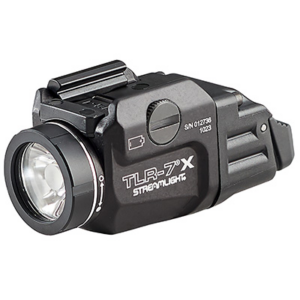
Standardization is the one-spec-per-class lesson from the year-end guide, applied with the time to do it right. The classic candidate is the duty light: one handheld spec across the roster — a full-size rechargeable like the Stinger 2020 or a compact like the ProTac 2L X — picked by a small spec panel reading beam numbers the way the lumens-versus-candela guide lays out. One spec pays twice, in reordering and in training. Your policy and your spec make the pick — we describe, you verify. The lights category is the panel’s shortlist source.
New capability is the gaps ledger converted into a program. The worked example on our shelf is patrol trauma kits — not a one-time buy but a program with fielding, storage, and a refill cadence, built from manufacturer-filled kits like the First Call-In Bag with Basic Fill Kit and the Trauma Attack Pack with Standard Fill Kit from the first-responder kit lineup. The program logic — scale, storage, refills — has its own guide: building patrol kits at department scale. Whatever your gap is, the pattern holds: new capability deserves a named program, not a line squeezed into somebody else’s.
The reserve is the quiet fourth program: the mid-year hire, the failure no ledger predicted, the replacement that cannot wait for next October. A reserve is not slack — it is the program that keeps the other three from being raided in February. Give it an owner and a review date like the rest.
A year on one page
The federal-calendar version — slide the quarters to match your own year:
| Quarter | The work |
|---|---|
| Q1 (Oct–Dec) | Audit. Spec panels convene. Trials start — and show season lands here; walked correctly, an expo floor is a trial venue, not a buying venue. |
| Q2 (Jan–Mar) | Decisions. Panels report, the fleet list firms up, and money gets committed program by program. Zero-fitment classes can move now. |
| Q3 (Apr–Jun) | Buy and field. Gear arrives while the year still has runway to absorb a surprise — a wrong size run found in May is a fix, not a crisis. |
| Q4 (Jul–Sep) | Close gaps. Finish programs; start none. September is for finishing — which is the whole point of this page. |
The fitment gate, again
One gate survives from the year-end sort unchanged, because it was never about deadlines — it is about how the gear works. Anything fitted per officer moves only behind an audit.
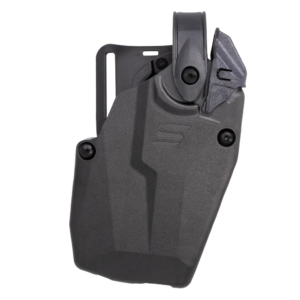
A duty holster is the clearest case: fit runs per pistol, optic, and weapon-light combination, so a single model like the 7360RDS for a Glock 17 MOS with light is one cell in a fleet matrix. Mapping that matrix — officer by officer, combination by combination — is the audit, and the red-dot transition guide makes it the first move of the whole program for exactly this reason.
The new-year version of the gate is generous where the year-end version was strict: there is finally time to do it properly. A fitted program that spends Q1 on its audit and trial window earns its Q3 buy. One that skips the audit spends Q3 discovering the matrix the hard way, one return at a time. If the audit does not exist yet, that is not a delay — that is the program’s first quarter doing its job.
FAQ
When does the new fiscal year start for police departments? The federal fiscal year opens October 1. Many state and municipal budget years open July 1, and some agencies run on the calendar year. The planning sequence in this guide is the same regardless — audit first, programs second, buying third — only the month names change.
What should a department buy first with a new budget year? Nothing, for about a month. The first move is the audit: a condition ledger, a lifecycle ledger, a current size run, and a list of deferred gaps. Every strong buying decision later in the year traces back to those four pages; every shelf of unused gear traces back to skipping them.
How do you set up a gear replacement cycle? Build the lifecycle ledger from manufacturer guidance and observed wear, then fund replacement as a standing quarterly line with an owner — not an annual event. A replacement cycle that runs on its own schedule stops competing with new programs every fall, and reordering one known spec is a line item, not a decision.
When should fitted-gear programs like holsters or optics start? At the start of the year, behind an audit and a trial window — never at a deadline. Fit runs per combination of pistol, optic, and light, so the audit is the program’s real first quarter. If the audit already exists, the program is ready to buy; if it does not, building it is the first milestone.
More planning guides live in the Resource Center. And when a program firms up: send the Gear Desk the list — we’ll tell you what fits first and what can wait.